
Meta’s Andromeda Algorithm: The New AI Super-Brain Changing Facebook Ads Forever
Why your old Meta Ads playbook is fading — and what strategic pivots to make for Andromeda: creative portfolio, broad targeting, data quality, and automation-first account structure.
Meta’s Andromeda Algorithm: The New AI-“Super-Brain” That’s Changing How You Run Ads
*Why your old playbook is fading — and what to do instead*
What is Andromeda — and why it should matter to you
If you’ve been running Meta ads and wondered why your ROAS has dropped, CPMs have jumped, or your carefully-segmented interest audiences no longer perform — you’re not imagining it. Meta has quietly replaced a large part of its ad-delivery engine with Andromeda, a next-generation AI retrieval system that shifts the fundamentals of how ads are found, matched and shown.
In plain terms:
- In the old world you selected an audience (e.g., men 25-35 interested in running shoes), chose creative, set a bid/budget and hoped the system found the right people.
- With Andromeda, Meta’s system analyses many more user signals + many more creative variants, more quickly, using a far more powerful model and hardware stack.
- The key change: creative becomes the new audience — your messages, formats and variations matter more than narrowly defining who to target.
Meta claims Andromeda delivers a “10,000×” increase in model capacity for retrieval, a key step in ad ranking. Early reports also show improved ad quality, higher recall of relevant ads and improved return on ad spend (ROAS) for advertisers who adopt the new model.
Why your old “micro-targeting” playbook is showing cracks
You might recognise many of the symptoms:
- You used to carve out dozens of interest-tag ad sets, each targeting 3-5 niches.
- You had a “single big winner” creative you scaled until saturation.
- You regularly tweaked interests, exclusions, bids, placements.
Now:
- Andromeda’s retrieval engine doesn’t rely on your manual interest tags as much — it uses richer signals, sequence of user interaction, context, creative-to-user matching.
- With restrictive audience definitions you may be *limiting* the algorithm’s ability to learn and scale. Broad targeting + many creative variants give it more room.
- The “one big winner” creative model is becoming obsolete — because the algorithm rewards creative portfolio depth (many distinct angles + formats) more than incremental tweaks of the same creative.
For example: The retrieval stage now needs to handle tens of millions of ad candidates, and needs very low latency (speed) so that scrolling users get the right ad in milliseconds. That prior bottleneck is what Andromeda is built to overcome.
What this means for your ad strategy: Three key shifts
Here are three strategic pivots you must make to align with the Andromeda era:
1. From precision-targeting to broad trust (large-scale targeting)
- Let go of overly narrow interest sets or micro-segmented ad sets. Instead adopt broad targeting (age/gender/region only) and let Meta’s AI find the best people for you.
- Use the Advantage+ automated campaign types (such as Advantage+ Shopping/Advantage+ App) to give the system the freedom it needs.
- Simplify account structure: fewer campaigns, fewer ad sets, more budget per ad set. Allow the algorithm to learn efficiently.
2. From one “perfect” creative to a creative assets pool
- Treat your creative library like fuel for the algorithm: the more meaningful variety you feed in (angles, formats, messaging), the better Andromeda can match the right message to the right user.
- Avoid just minor edits of one hero video. Instead create truly distinct creative concepts: UGC, founder story, product demo, emotional hook, testimonial, etc.
- Prioritise short-form immersive video (e.g., Reels) as algorithm-friendly formats.
- Refresh creatives regularly and escalate production of creative assets. The system rewards fresh input.
3. Data tracking & signal hygiene become non-negotiable
- Because Andromeda relies on rich behavioural & conversion signals, you must ensure your tracking is accurate: use the Conversions API (CAPI), server-side events, valid pixel/data integration.
- The algorithm does not just care about installations/clicks—it increasingly factors in downstream value, retention, LTV, user behaviour. So your data should reflect real quality, not just raw volume.
- Poor user experience (weak landing page, slow app conversion, low retention) will reduce algorithm trust and inflate cost. So operational excellence matters now.
Your action plan: What to do now
Here’s a practical checklist for making the transition to Andromeda-ready campaigns:
- Audit current campaign structure: merge fragmented campaigns, minimise interest layering, increase budget per ad set to allow learning.
- Build a creative pipeline: Plan (say) 10-15 distinct creative concepts for your hero product. Different lengths, formats, angles, hooks, actors. Feed them incrementally each week or bi-weekly.
- Switch to broad targeting: Age/gender/region only if possible. Let placements, audiences, budgets be driven by Meta.
- Deploy Advantage+ campaign types if available for your objective (Shopping, App, Leads).
- Ensure CAPI and pixel events are fully implemented and verified. Track meaningful events (purchase, add-to-cart, retention).
- Monitor new metrics: not just CTR/CPC, but creative health (how many variations are being served), signal volume (conversions), and backend quality (LTV, retention).
- Refresh creatives regularly; archive stale ones. Avoid saturating the same message.
- Scale with confidence: once a creative concept shows positive signs, let the system optimise and allocate budget rather than manually shifting budgets between many ad sets.
Why this matters for cross-border / e-commerce advertisers
Since you operate in or serve markets like international e-commerce, this change is particularly relevant. The “micro-interest targeting” approach may have worked well when data and audience signals were rich—but in global markets (and with privacy/data constraints increasing) a model that leverages creative + broad targeting + automation has a higher chance to scale.
In your case, if you were used to splitting by country-interest combinations and chasing that one hero ad — that playbook is under pressure. But if you shift to the new model, you position for stable ROAS, better scalability, and less manual overhead.
Summary: Moving from “controller” to “creative strategist”
The underlying message is: Meta has handed over more of the controls to its AI engine. Your role now evolves from manual “audience fiddler” to high-impact “creative strategist + signal protector.”
If you keep clinging to old habits (50 interest ad sets, tiny budgets per set, relying on one perfect creative) you run the risk of higher CPMs, unstable ROAS and falling behind competitors who adapt.
But if you embrace this new era — simplifying structure, feeding creative variety, trusting automation, and ensuring solid data/tracking — you put yourself in a strong position to win in the Andromeda era.
Final Words
$ROAS;dropping?$ Not necessarily your fault — it may simply be that Meta’s algorithm changed. $Old;playbook = dead$? Quite likely — the paradigm shift is real. But strategy isn’t dead — it just needs to evolve.
Focus on broad targeting, creative diversity, data quality—that’s your new winning hand.
Get your ad account ready for Andromeda. Your competition already is.
You May Also Like
Is Meta's "Andromeda" Update Killing Manual Targeting—or Making Us Better Marketers?
Your old Facebook Ads playbooks stopped working overnight. Meta's Andromeda AI brain changed the game—here's what actually works now, with real test data from $17K+ in spend.
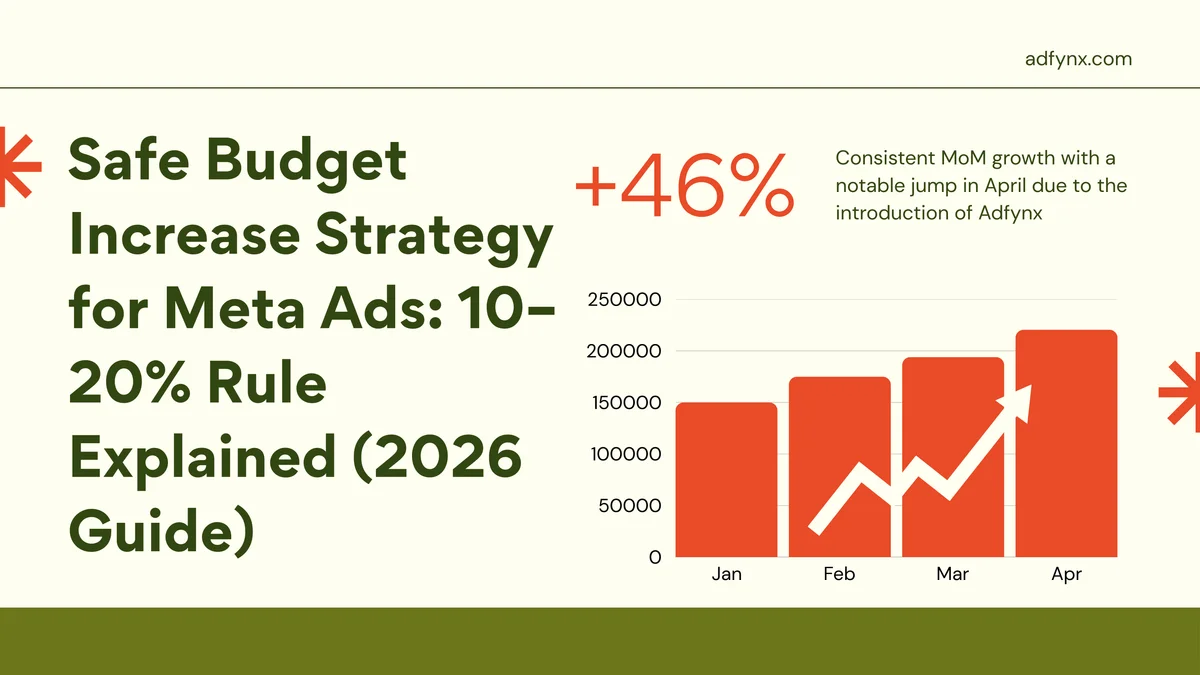
Safe Budget Increase Strategy for Meta Ads: 10–20% Rule Explained (2026 Guide)
Master safe Meta ads budget scaling with the proven 10-20% daily increase rule. Learn optimal timing (target region midnight), threshold limits (20% safe, 30-50% aggressive, >50% triggers learning reset), vertical vs horizontal scaling approaches, and when to break the rule for breakthrough scaling with broad targeting strategies.
Meta Ads Budget Distribution Explained: CBO vs ABO Strategy Guide for 2026
Master Meta ads budget distribution with the complete CBO vs ABO comparison. Learn when to use Campaign Budget Optimization (algorithmic distribution, 3-4 ad sets for small budgets, 7-10 for large) vs Ad Set Budget Optimization (manual control, testing scenarios), optimal ad set quantities by budget level, and why the 20% scaling rule is obsolete in 2026's AI-driven algorithm.
Subscribe to Our Newsletter
Get weekly AI-powered Meta Ads insights and actionable tips
We respect your privacy. Unsubscribe at any time.