
I Spent $2M on Ads to Learn This: The Best New Brand Strategy Is 'Copying' Homework
New Shopify store? Empty audience? Limited budget? Stop guessing. The smartest strategy isn't innovation—it's strategic replication. Learn how to 'copy' what's already working and save yourself $200K in testing costs.
TL;DR: Launching a new brand with an empty audience and limited budget? Stop trying to innovate from scratch. The smartest strategy is strategic replication—"copying" what's already been proven to work. Your successful competitors spent hundreds of thousands testing what hooks convert, which offers work, and how to structure funnels. Why waste your budget repeating their experiments? This guide teaches the "spy methodology": (1) Find live winning ads (not just Ad Library archives), (2) Deconstruct their hooks (first 3 seconds, pain points, promises), (3) Become a real customer—go through their entire funnel (landing page, add-to-cart, checkout, upsells, abandoned cart emails, retargeting), (4) Build your "homework sheet"—document 5 competitors' strategies, and (5) Replicate the model (not the assets)—use their angles, offers, and funnel structure with your own creative. This isn't stealing—it's strategy migration. You're starting where they succeeded, not where they started. Save $200K in testing costs and launch with confidence.
---The Question Every New Brand Asks
"I just launched my Shopify store. My audience is empty. I have $3,000 to spend. How do I run ads without burning all my money and getting zero results?"
I hear this question every week.
And my answer is always the same:
"Copy homework."
Not the creative. Not the brand.
Copy the proven strategy behind it.
---The Time Tunnel: What Africa and Southeast Asia Taught Me
Let me share two stories that changed how I think about launching new brands.
Story 1: The African Stage Lighting King
A Chinese entrepreneur dominates the stage lighting equipment market in Africa. He's the #1 brand.
One day, he heard about a case study: Emma Electric Scooters in China hosted 30+ music festivals in one year, and sales exploded.
His immediate thought: "Can I sponsor music festivals for African artists?"
He did. It worked. Massive growth.
---Story 2: The Ice Cream Freezer Strategy in Southeast Asia
An entrepreneur wanted to sell ice cream in Southeast Asia. How do you scale fast in a fragmented market?
He remembered his time working at Mengniu (a major Chinese dairy brand) years ago. Their strategy: Give free freezers to every small shop.
He replicated it in Southeast Asia. Free freezers to every convenience store.
Growth went through the roof.
---What These Stories Teach Us
Both entrepreneurs did the same thing:
They activated a "time tunnel."
They took a proven strategy from Market A (advanced market) and transplanted it to Market B (less developed market).
This is dimensional advantage.
And here's the key insight for Facebook Ads:
Your new brand is Market B. Your successful competitors are Market A.---
Your Competitors Already Spent $200K Testing—Use Their Data
Your competitor who does $10M/year in revenue didn't get there by luck.
They spent hundreds of thousands of dollars testing:
- ✅ Which pain points resonate most with customers
- ✅ Which creative styles convert best (UGC, unboxing, professional reviews)
- ✅ Which offers drive purchases (free shipping, BOGO, 30% off)
- ✅ How to structure landing pages for maximum conversion
- ✅ What upsells and cross-sells increase AOV
These are their "standard answers," paid for with real money.
As a new brand, your smartest move is to use their answers as your starting point.
---Don't Just Check Ad Library—Become a Spy
Most beginners say: "I know, I'll just check Facebook Ad Library."
That's surface-level.
Ad Library shows you archived ads—many of which are dead or underperforming.
What you need is the "spy methodology"—a systematic approach to reverse-engineering their entire strategy.
---The 4-Step Spy Methodology
Step 1: Find LIVE Winning Ads (Not Dead Archives)
Don't rely only on Ad Library.
You need to see what they're actively running right now—the ads that are actually working.
How to trigger their ads:
1. Visit their website and browse products
2. Subscribe to their email list
3. Add items to cart but don't purchase
4. Follow their Facebook/Instagram pages
5. Search their brand name on Google
6. Engage with their content (like, comment, share)
Within 24-48 hours, you'll start seeing their retargeting ads and current campaigns in your feed.
These are the "hot" ads—the ones they're spending money on right now.
---Step 2: Deconstruct Their Hooks
When you see an ad, don't look at the image first.
Look at:
1. The first sentence of the copy
2. The first 3 seconds of the video
What are they doing?
Creating Anxiety?
- "Is your [problem] getting worse?"
- "Still struggling with [pain point]?"
Making a Promise?
- "Get [result] in 3 days!"
- "Finally, a solution that actually works"
Showing Results?
- Before/after images
- Shocking transformations
- Social proof (testimonials, reviews)
Write down every hook you see.
These are validated pain points—proven to stop the scroll and generate clicks.
---Step 3: Become a Real Customer—Walk the Entire Funnel
This is the most critical step.
You must actually go through their buying process like a real customer.
Don't just look. Buy something.
Here's what to analyze:
---A. Landing Page (LP)
- Is it a product detail page (PDP) or a dedicated landing page?
- What's the first CTA (call-to-action)? ("Add to Cart," "Shop Now," "Learn More")
- What's above the fold? (Hero image, headline, value proposition)
- How do they structure benefits? (Bullet points, icons, comparison tables)
- Do they use cross-sells? ("Customers also bought...")
B. Add to Cart (ATC)
- What happens after you click "Add to Cart"?
- Do they show a progress bar? ("You're $20 away from free shipping!")
- Do they offer bundle deals? ("Buy 2, Get 1 Free")
- Do they create urgency? ("Only 3 left in stock!")
C. Checkout Process
- How many steps? (One-page checkout vs multi-step)
- Do they offer express checkout? (Shop Pay, PayPal, Apple Pay)
- What trust signals do they show? (Security badges, money-back guarantee, reviews)
- Do they have a last-minute upsell? ("Add [product] for just $9.99!")
D. Abandoned Cart Recovery
This is where the magic happens.
1. Add items to cart, then close the browser
2. Wait 1 hour, then 24 hours
3. Check your email and SMS
What do they send?
- Reminder email? ("You left something behind!")
- Discount offer? ("Here's 10% off to complete your order")
- Urgency message? ("Your cart expires in 2 hours!")
E. Retargeting Ads
After abandoning cart, watch your Facebook/Instagram feed.
What retargeting ads appear?
- Dynamic product ads (showing the exact items you viewed)
- Discount offers ("Come back and save 15%")
- Social proof ("Join 50,000+ happy customers")
Step 4: Build Your "Homework Sheet"
Create a simple spreadsheet and document 5 competitors.
Columns to track:
| Competitor | Hook Style | Core Offer | Landing Page Type | ATC Strategy | Checkout Upsell | Abandoned Cart | Retargeting Angle |
|---|---|---|---|---|---|---|---|
| Brand A | Anxiety ("Still struggling?") | BOGO | Dedicated LP | Bundle popup | $9.99 add-on | 10% discount email | Dynamic product ads |
| Brand B | Promise ("3-day results") | 30% off | PDP | Free shipping bar | None | Urgency SMS | Social proof |
| Brand C | Results (before/after) | Free shipping | Dedicated LP | Cross-sell | $15 upgrade | Reminder email | Testimonial video |
When you fill out 5 competitors, you'll see patterns:
- ✅ They all use UGC video
- ✅ They all offer "Buy 2, Get 1 Free"
- ✅ They all focus on solving [specific problem]
This is your "standard answer."
Your first week of testing should validate this proven model, not guess randomly.
---Analyzing Your Competitive Intelligence with AI
One of the biggest challenges with competitive research is organizing and analyzing all the data you collect.
Common struggles:
- You've documented 5 competitors but can't identify clear patterns
- You're not sure which strategies are most important to replicate
- You don't know if your own ads are matching the winning formulas
- It's time-consuming to manually compare your performance to competitors
The solution: Use an AI-powered analytics tool to help you make sense of competitive data and your own performance.
Try Adfynx for Free — AI Meta Ads Analyst that helps you:
- Ask strategic questions — "How does my CTR compare to industry benchmarks?" or "Which of my ads has hooks similar to top competitors?"
- Get instant insights — See how your creative performance stacks up against the patterns you've identified in competitor research
- Analyze what's working — Identify which of your tested angles, offers, and formats are performing best
- Generate reports — Auto-generated insights showing what's working and what needs adjustment based on competitive intelligence
Stop manually tracking spreadsheets. Get your free AI audit and turn competitive research into actionable strategy in 60 seconds.
---Real Example: How This Saved $50K in Testing
I once worked with a client launching a new product line.
We analyzed 5 top competitors and discovered:
- ❌ Discount offers didn't work in this category
- ✅ Professional certifications and warranties drove conversions
- ✅ Educational content (how-to videos) outperformed product demos
If we had started with "50% OFF" campaigns, we would have wasted $50K+ before figuring this out.
Instead, we launched with:
- ✅ Certification badges
- ✅ Extended warranty offers
- ✅ Educational video ads
Result: Profitable from Week 1.
---"Copying" Isn't Stealing—It's Strategy Migration
Let me be crystal clear:
I'm NOT telling you to download their videos or impersonate their brand.
That's stealing, and it will get your account banned.
What I AM telling you to do is "strategy migration":
---Copy Their Angle (Not Their Creative)
- They use UGC? → You shoot UGC with your own product and script
- They use before/after? → You create your own before/after with real customers
- They use testimonials? → You collect your own testimonials
Copy Their Offer (Test Variations)
- They do "Buy 2, Get 1 Free"? → You test "Buy 2, Get 1 Free" AND "Buy 2, Save 20%"
- They offer free shipping over $50? → You test free shipping over $40 or $60
- They bundle products? → You create your own bundles
Copy Their Funnel (Replicate the Structure)
- They use add-to-cart upsells? → Install an upsell app on your Shopify store
- They send abandoned cart emails? → Set up your own email sequence
- They retarget with dynamic ads? → Create your own dynamic product catalog
What You're Actually Doing
You're replicating a proven business model, then optimizing it to create your own:
- ✅ Brand differentiation
- ✅ Customer relationships
- ✅ Unique value proposition
You're starting where they succeeded, not where they started.
---The New Brand Launch Framework
Here's your step-by-step plan:
Week 1: Research Phase
- [ ] Identify 5 top competitors
- [ ] Go through their entire funnel as a customer
- [ ] Document hooks, offers, landing pages, upsells, emails
- [ ] Build your "homework sheet"
Week 2: Setup Phase
- [ ] Create 3-5 ad variations based on competitor hooks
- [ ] Set up landing page (replicate structure, not design)
- [ ] Install upsell/cross-sell apps
- [ ] Configure abandoned cart emails
- [ ] Set up Facebook Pixel and CAPI
Week 3: Testing Phase
- [ ] Launch campaigns with proven offers
- [ ] Test 3-5 creative angles (based on competitor research)
- [ ] Monitor CTR, CPC, ATC, Purchase
- [ ] Let campaigns run for 7 days minimum
Week 4: Optimization Phase
- [ ] Identify winning creatives
- [ ] Scale winning ad sets
- [ ] Create new variations of winners
- [ ] Optimize landing page based on data
Common Mistakes to Avoid
❌ Mistake 1: Only Looking at Ad Library
Problem: You're seeing old, dead ads—not what's currently working.
Solution: Become a real customer and trigger live retargeting.
---❌ Mistake 2: Copying Creative Assets
Problem: This is stealing and will get you banned.
Solution: Copy the strategy, create your own assets.
---❌ Mistake 3: Analyzing Only 1-2 Competitors
Problem: You might be copying an outlier or a failing strategy.
Solution: Analyze 5+ competitors to find consistent patterns.
---❌ Mistake 4: Skipping the Funnel Analysis
Problem: You copy the ad but miss the landing page, upsells, and emails that actually drive profit.
Solution: Go through the entire customer journey.
---❌ Mistake 5: Not Testing Variations
Problem: You replicate exactly what competitors do without testing improvements.
Solution: Use their strategy as a baseline, then test variations.
---Advanced Competitive Research Tactics
Tactic 1: Monitor Competitor Ad Frequency
How:
- Follow competitor pages
- Note how often you see their ads
- High frequency = high spend = likely profitable
Why it matters: If they're spending heavily, it's working.
---Tactic 2: Track Competitor Landing Page Changes
How:
- Use Wayback Machine (archive.org)
- Screenshot their landing pages monthly
- Note what changes over time
Why it matters: Changes indicate optimization—they're improving what works.
---Tactic 3: Join Their Email List and Customer Groups
How:
- Subscribe to their emails
- Join their Facebook groups or communities
- See what content they send post-purchase
Why it matters: Post-purchase strategy drives LTV and repeat purchases.
---Tactic 4: Analyze Their Review Patterns
How:
- Read their product reviews (on-site and third-party)
- Note common complaints and praises
- Identify gaps you can fill
Why it matters: Reviews reveal what customers actually care about.
---The Competitive Research Toolkit
Free Tools
- Facebook Ad Library — See archived ads
- Google Search — Trigger retargeting
- Wayback Machine — Track landing page changes
- Similar Web — Estimate traffic sources
Paid Tools
- AdSpy — Advanced ad search and filtering
- PowerAdSpy — Competitor ad monitoring
- Semrush — SEO and traffic analysis
- Adfynx — AI-powered performance analysis
Case Study: $3K Budget → $50K Revenue in 60 Days
Background:
- New skincare brand
- Zero audience
- $3,000 testing budget
Strategy:
1. Analyzed 5 top competitors
2. Identified winning pattern: UGC videos + "Buy 2, Get 1 Free" + Educational landing page
3. Created 5 UGC videos with similar angles
4. Replicated landing page structure
5. Set up abandoned cart sequence
Results:
- Week 1: $500 spend, $800 revenue (1.6 ROAS)
- Week 4: $1,200 spend, $3,600 revenue (3.0 ROAS)
- Day 60: $15K total spend, $50K revenue (3.3 ROAS)
Key insight: Started with proven model, not random testing.
---Related Resources
Want to understand Meta's algorithm? Check out our Meta Andromeda Algorithm Guide to learn how the system evaluates your ads.
Need help with creative specs? Read our Facebook Ads Creative Sizes Guide to ensure your replicated creatives display perfectly.
Struggling with metrics? Dive into our Meta Ads Metrics Guide to understand which KPIs matter when testing new strategies.
---Final Thoughts: Start Where They Succeeded
Here's the truth about launching new brands:
Innovation is expensive. Replication is efficient.
Your competitors spent $200K-$500K figuring out:
- What messages resonate
- Which offers convert
- How to structure funnels
- What upsells increase AOV
Why would you start from zero when you can start from their success?
---The New Brand Manifesto
Old approach:
- Guess what might work
- Test randomly
- Burn budget
- Learn slowly
- Maybe succeed
New approach:
- Research what's proven
- Replicate strategically
- Test variations
- Learn quickly
- Succeed faster
Your Action Plan (Next 7 Days)
Day 1-2: Identify Competitors
- [ ] Find 5 top competitors in your niche
- [ ] Follow their pages
- [ ] Subscribe to their emails
Day 3-4: Become a Customer
- [ ] Go through their entire funnel
- [ ] Document everything
- [ ] Take screenshots
Day 5-6: Build Your Homework Sheet
- [ ] Fill out competitor analysis spreadsheet
- [ ] Identify patterns
- [ ] Note what's consistent across all 5
Day 7: Plan Your Launch
- [ ] Choose which strategies to replicate
- [ ] Create your creative brief
- [ ] Set up your funnel structure
Remember This
You're not copying to be lazy.
You're copying to be smart.
You're using validated market intelligence to:
- ✅ Reduce risk
- ✅ Save money
- ✅ Launch faster
- ✅ Succeed sooner
Then, once you're profitable, you innovate.
But first, you replicate.
That's the $2M lesson.
---The Bottom Line
If I could give one piece of advice to every new brand launching on Facebook Ads, it would be this:
Your competitors already paid for your education. Don't waste it by starting from scratch.
Find what's working.
Replicate the strategy.
Create your own assets.
Test variations.
Scale winners.
That's how you launch a new brand in 2025.
Not with innovation.
With intelligent replication.
Now go copy some homework.
(The right way.)
You May Also Like
I Spent $2M on Facebook Ads to Learn This: 4 Secrets to Consistent Profitability
Money out, no clicks, or clicks with no sales? Facebook ads aren't magic—they're a system. After spending $2M, I've distilled it down to 4 pillars: precise audience targeting, effective (not pretty) creatives, conversion-focused copy, and continuous PDCA optimization. Master these, profit consistently.
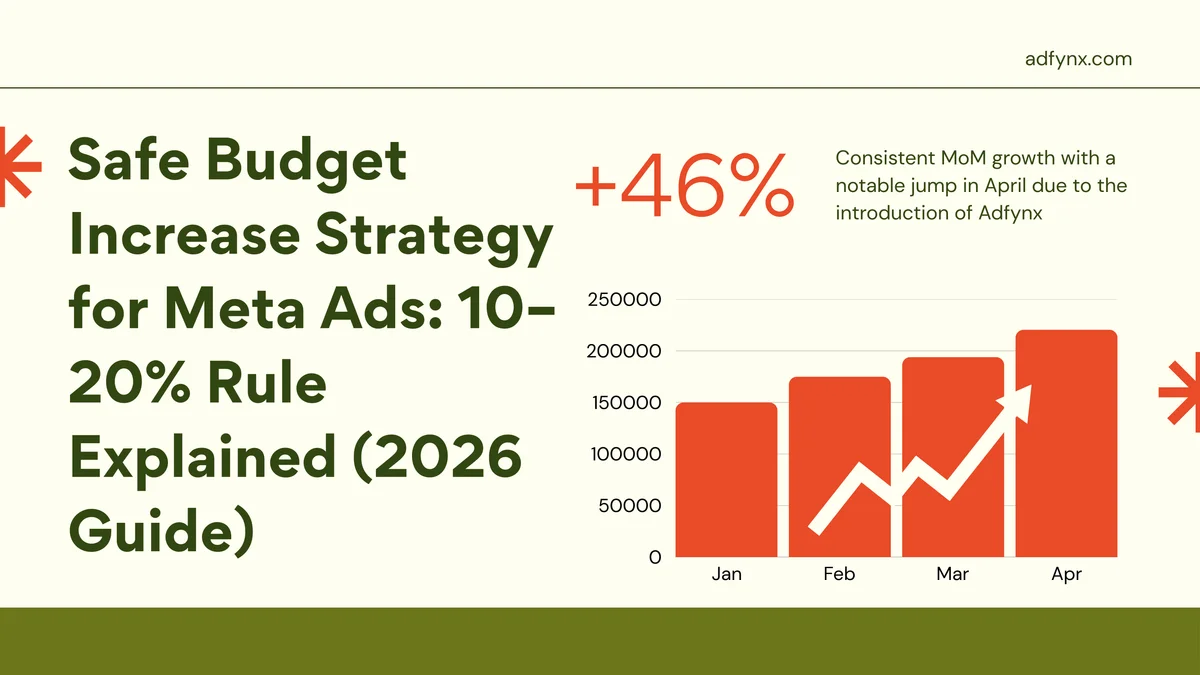
Safe Budget Increase Strategy for Meta Ads: 10–20% Rule Explained (2026 Guide)
Master safe Meta ads budget scaling with the proven 10-20% daily increase rule. Learn optimal timing (target region midnight), threshold limits (20% safe, 30-50% aggressive, >50% triggers learning reset), vertical vs horizontal scaling approaches, and when to break the rule for breakthrough scaling with broad targeting strategies.
Meta Ads Budget Distribution Explained: CBO vs ABO Strategy Guide for 2026
Master Meta ads budget distribution with the complete CBO vs ABO comparison. Learn when to use Campaign Budget Optimization (algorithmic distribution, 3-4 ad sets for small budgets, 7-10 for large) vs Ad Set Budget Optimization (manual control, testing scenarios), optimal ad set quantities by budget level, and why the 20% scaling rule is obsolete in 2026's AI-driven algorithm.
Subscribe to Our Newsletter
Get weekly AI-powered Meta Ads insights and actionable tips
We respect your privacy. Unsubscribe at any time.